Nkuhuma Male's Struggles and Journey
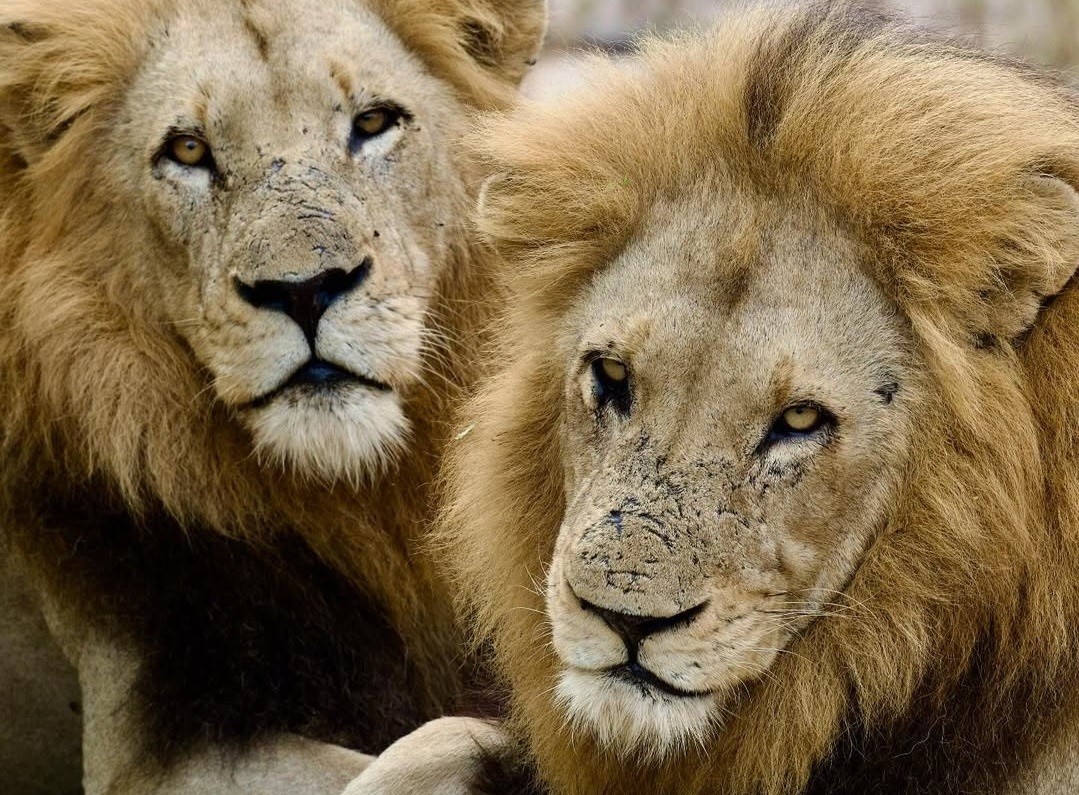
Born in 2016, the Nkuhuma male has had a tumultuous path. Originating from the Nkuhuma Pride in the Sabi Sands, he has faced several challenges in his attempt to establish himself as a dominant male. Despite his age and strength, he has struggled to secure and maintain a territory. His repeated changes in coalition partners and apparent lack of confidence have hindered his ability to achieve long-term stability. While other males his age have successfully taken over prides and ruled territories, the Nkuhuma male has often found himself on the fringes—unable to assert control or defend a claim. His inconsistency has prevented him from becoming a truly dominant figure in the region.
Khanya: A Young Male with Potential
Khanya, on the other hand, is a much younger male born into the Talamati pride. Still in the early stages of his life, Khanya brings youthful energy but lacks experience. His role in the coalition adds a fresh dynamic—while Nkuhuma contributes maturity, Khanya is still learning the social and territorial intricacies of lion life. Having yet to face the serious trials that come with leadership, Khanya remains a student of the wild. His potential is clear, but it’s evident that he is not yet ready to lead a coalition or pride on his own.
The Formation
In 2024, the Nkuhuma and Talamati males formed a coalition. This partnership, while not ideal, was a strategic decision driven by necessity. The Nkuhuma male, having failed to secure a territory or establish a lasting coalition, sought strength in numbers. Khanya, though inexperienced, offered a fresh start and potential for growth. For Khanya, joining an older, more seasoned male provided valuable exposure to the realities of territorial life. Their union was less about balance and more about mutual need—neither had a territory, and neither could thrive alone. Nkuhuma brought survival knowledge and history, while Khanya offered energy and resilience. Together, they began working toward a future they could not achieve individually.
2025
Entering 2025, the newly formed Nkuhuma and Talamati coalition spent much of their early months still solidifying their bond. While both males brought different strengths to the partnership, their cohesion had yet to fully develop, and as a result they were not yet in a position to challenge established territorial coalitions. Instead, they were frequently seen along the boundary between Londolozi and the western block, carefully navigating a landscape already dominated by powerful neighbors. To their northeast were the Plains Camp males, while to the east the Ndzhenga coalition held firm control over key areas of the central Sabi Sands. As the year progressed, the shifting dynamics of the region began to present opportunities. The Ndzhenga males eventually moved north, leaving behind a vacuum that was quickly filled by the Gijima coalition. Amid this reshuffling of power, the Nkuhuma and Talamati males focused their attention on the semi-nomadic Mhangeni pride, a group known for moving frequently through the area. Early in the year, the coalition made several attempts to chase and harass the pride, gradually establishing a level of tolerance and familiarity that would later develop into dominance over the pride.
One of the most significant confrontations of the year occurred in mid-2025, when the Nkuhuma and Talamati males were discovered deep within Plains Camp territory. The Plains Camp males launched a sudden attack after finding the rivals sleeping just metres away. The Talamati male was the first to be engaged, caught off guard before he could fully react. Although the Nkuhuma and Talamati coalition briefly attempted to resist, they were quickly overpowered and forced into retreat. The Plains Camp males pursued them aggressively, roaring and scent-marking the area as a clear and deliberate warning that intrusions into their territory would not be tolerated. Despite this setback, the Nkuhuma and Talamati males managed to regroup and re-establish themselves east of the Plains Camp territory. From mid to late 2025, they eventually became dominant over the Mhangeni pride and headed into 2026 as dominant males with a territory and pride.
Current Status
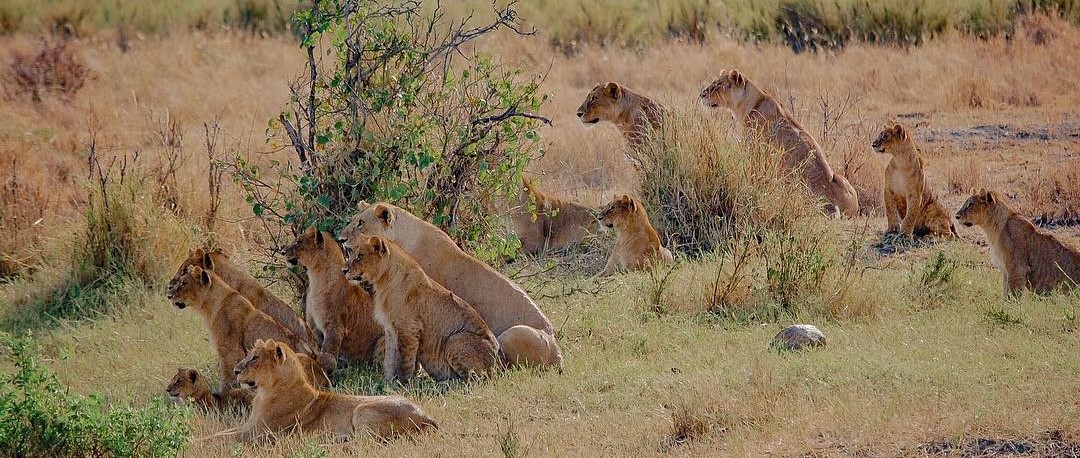
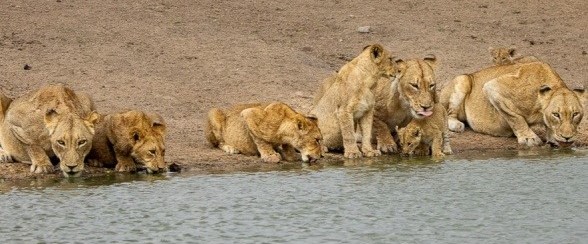
The Nkuhuma and Talamati males began the year in a more stable position than ever before, entering 2025 as the dominant males over the Mhangeni pride. Early sightings in January confirmed that at least one of the lionesses showed clear signs of recent suckling, and shortly thereafter four new cubs were introduced to the coalition. This marked an important milestone for the coalition. Since then, the coalition has maintained a consistent presence in the area alongside the Mhangeni pride. Their continued presence has helped reinforce their hold over the pride, with the males regularly patrolling and accompanying the lionesses and cubs. However, the true test of their partnership still lies ahead. With established coalitions such as the Plains Camp males and the Gijimas as neighbors, pressure on this young alliance is inevitable. For now, they hold their ground—but their future will depend on how they respond when, not if, their position is tested.
The information was gathered through various public medias such as blog pages, forums, and online groups.