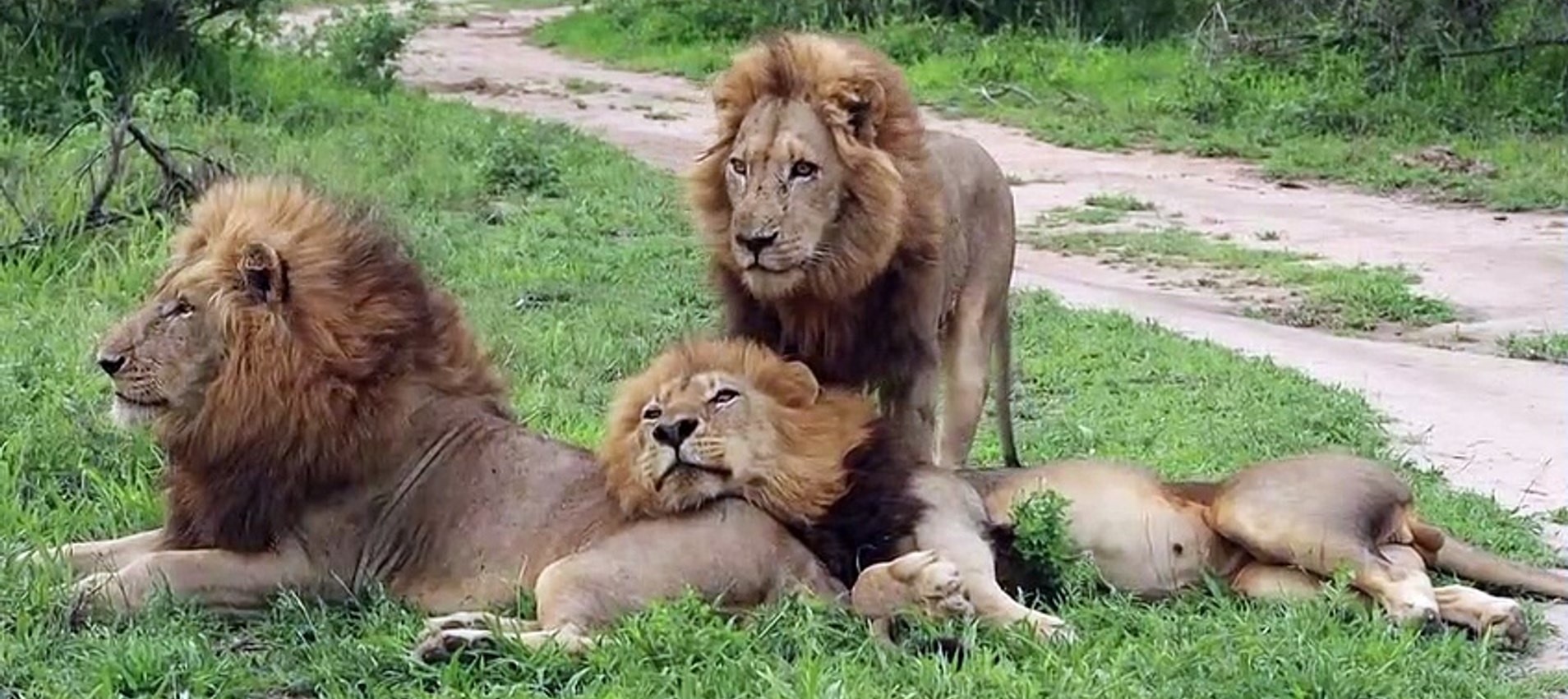
Early Skirmishes and Successes
Still just outside their prime, the Plains Camp males were making moves usually associated with experienced campaigners. Their early years were spent as nomadic survivors, but they evolved into strategic contenders. The Plains Camp males quickly established themselves when the opportunity arose. The last Tumbela male, a lone dominant in western Sabi Sands, was an easy target. The two males swiftly dispatched him and took over the territory. They boldly moved through rival territories, responding aggressively and quickly to any males they encountered. This was evident in their altercation with the coalition of the Nkuhuma male and the aging Birmingham male called Nhena. This coalition had taken over the Ximunghwe pride just west of the Plains Camp males. The Plains Camp males were familiar with the Nkuhuma male’s tendency to flee at signs of trouble. With Nhena joining him and gaining some success, they mistakenly challenged the Plains Camp males. Over the next few months, both coalitions pushed each other around, usually ending with the Plains Camp males forcing them out. Though the rivals returned repeatedly, eventually Nhena was caught and severely injured by the Plains Camp males. Having neutralized this threat, the Plains Camp males became dominant over the Ximunghwe pride as well as the Nkuhuma breakaways. We learned a lot about the Plains Camp males during this time: they were quick, aggressive, and always ready for confrontation. Their bravery and confidence often won battles without bloodshed. They were big, bold, and riding high on the confidence of their recent success. Few dared to challenge them, and those who did paid a heavy price.
Meeting Their Match
The Plains Camp males truly peaked after their success against the Nkuhuma male and Nhena. Having removed their only somewhat serious competition, they became the force they were destined to be. As they matured over the last few years, a bigger force was gaining ground in the southern reserve. The four Ndhzenga coalition evolved from timid newcomers to confident dominant males. Of these four, two carried significant injuries from nomadic years and relied on their fitter brothers to carry most of the workload. When the Ndhzengas moved their territory north, just east of the Plains Camp males, the two injured males eventually died from injuries or fights. The two remaining males became neighbors to the Plains Camp males, making a showdown inevitable. The conflict escalated when the Plains Camp males were seen chasing one Ndhzenga male through their territory. Fortunately for the lone Ndhzenga, his brother came to his aid. After regrouping, the Ndhzengas counterattacked, pushing the Plains Camp males back to their territory. This back-and-forth lasted over an hour, with both coalitions standing toe to toe, drawing a clear line in the sand. For the first time, the Plains Camp males faced a worthy adversary willing to push back against their usual aggression. Though no blood was drawn, the message from both sides was clear: the Plains Camp males had finally met their match.
Exploring the North
After encountering the two Ndhzenga males and reaching a stalemate, the Plains Camp males turned their attention north. Much of 2024 was spent exploring the area, and they were frequently seen alongside prides such as the Nkuhuma pride. The two males covered large distances daily, appearing in their usual territory by evening and then over 20 kilometers away in the north by morning. This extensive range was unsustainable, even for the Plains Camp males. During these reconnaissance missions, they remained unchallenged and even dominated the emerging force of the four Kambula males. Ultimately, the Plains Camp males returned to their original territory, abandoning their ambitions to control the entire northern half of the Sabi Sands. Attempting to hold such a vast territory would have risked stretching them too thin.
2025
The Plains Camp males spent much of 2025 reinforcing their position as one of the most formidable coalitions in Sabi Sands. They were seen regularly throughout their territory around Inyati, Dulini, and Singita, while occasionally venturing beyond their established boundaries around Elephant Plains and Djuma. The coalition was regularly seen with several prides, including the Othawa pride and their two cubs, the lone Tsalala female, and the Ximunghwe pride with their four cubs. In March 2025, the Plains Camp males went through a short phase of exploration, venturing far east of their traditional territory into areas around Elephant Plains and Djuma. The absence of any strongly established coalition in the region likely presented an attractive opportunity. Though they went unchallenged as they moved through the area, it was obvious that they couldn’t realistically secure a territory this vast being just two males. After several weeks of exploration, they returned to their core range in the west, seemingly content to focus on defending and consolidating the territory they already controlled.
One of the most significant confrontations of the year occurred in mid-2025, when the Plains Camp males encountered the Nkuhuma and Talamati coalition within their territory. The confrontation began when the Plains Camp males discovered the two rivals sleeping deep inside Plains Camp territory. Seizing the opportunity, they launched a sudden attack on the unsuspecting Talamati male, who was resting only metres away. Although the Nkuhuma and Talamati males briefly resisted, they were ultimately overwhelmed and forced to retreat. The Plains Camp males pursued them aggressively, roaring and scent-marking throughout the area as a clear warning that they would not tolerate intrusions into their territory. Despite this setback, the Nkuhuma and Talamati males eventually established a territory of their own just east of the Plains Camp coalition's range and became dominant over the Mhangeni pride, a pride the Plains Camp males' once held. There were also several minor confrontations throughout the year involving both the Gijima and Ndzhenga males. However, none of these encounters resulted in significant territorial changes or lasting impacts on the lion dynamics in the area. Overall, 2025 was another successful year for the coalition. Whether dealing with nomadic males, rival coalitions, or ambitious newcomers, the Plains Camp males consistently proved themselves capable of defending their territory and maintaining control over the prides under their protection. Time and again, they accepted every challenge presented to them and emerged with their dominance intact, further strengthening their reputation as one of the top coalitions in the Sabi Sands.
Current Status
The Plains Camp males have continued their undisputed dominance in the western sector of the Sabi Sands. Their territory remains secure, and they continue to be regularly seen with the prides under their control but the territorial landscape around them has changed considerably. To the east, the Nkuhuma and Talamati coalition have successfully established themselves and carved out a territory of their own. Meanwhile, the Gijima males have become the dominant force in areas previously controlled by the Ndzhenga coalition. For now, relations between these coalitions appear relatively stable. Territorial boundaries have become established, major confrontations have been limited, and each coalition seems content with its current position. However, stability among dominant male lions is often temporary. Territorial ambitions, pride movements, and the arrival of younger challengers can quickly alter the balance of power. Should tensions rise in the future, few would bet against the Plains Camp males. Throughout their reign, they have consistently demonstrated the confidence, aggression, and physical prowess needed to overcome virtually every challenge placed before them. For the moment, the status quo holds, but if the dynamics of the western Sabi Sands become more interesting, the Plains Camp males are likely to remain at the center of the story.
The information was gathered through various public medias such as blog pages, forums, and online groups.