Confrontation with the Southern Avocas
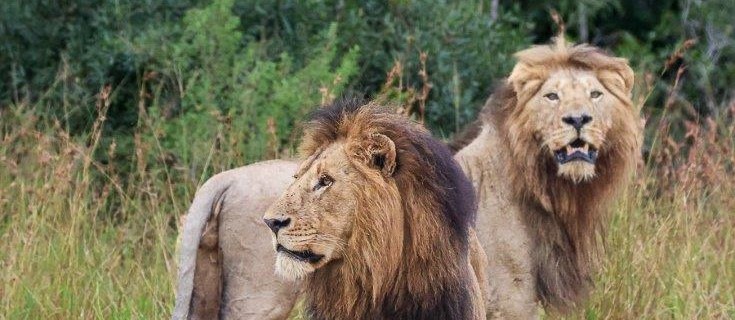
A pivotal moment in the Nkhulu Coalition's journey occurred when Dreadlocks joined their ranks. His presence initially strengthened their chances, providing much-needed experience in territorial battles. However, the coalition was soon tested in a brutal confrontation with the Southern Avocas, a rival and established territorial coalition. The encounter was intense, and Dreadlocks suffered severe mauling, though he miraculously survived. What stood out during this clash was the Nkhulu males’ lack of coordinated support. Despite Dreadlocks being a part of their group, the younger males appeared hesitant and unsure about defending him.
Victory at Last
Despite Dreadlocks' injuries, the Nkhulu Coalition maintained relentless pressure on the Southern Avocas. Even with one member out of action, the remaining Nkhulu males persisted in asserting their presence. Eventually, the constant strain became too much for the aging Avocas. After sustained pressure from the seven males, the Southern Avocas vacated the territory. This marked a significant milestone for the Nkhulus—they had become territorial males. Although Dreadlocks had been injured and the coalition showed little immediate support during his mauling, their overall persistence led to victory. The Southern Avocas abandoned the Sand River pride, and the Nkhulus swiftly claimed it. Since then, they have fathered multiple litters within the pride. As of 2025, members of the Nkhulu Coalition are frequently seen with the Sand River lionesses and cubs, especially around Kirkman’s Kamp. It’s believed they may also be dominant over other Kruger prides, though details about those remain scarce.
Conflict with the Gijima Males
To the west of the Nkhulus' newly acquired territory lies another coalition known as the Gijima coalition. Despite being just two in number, the Gijima males have proven to be formidable opponents. They have engaged in multiple territorial skirmishes with the Nkhulu males in a relatively short time. The younger Gijima male, in particular, displays remarkable confidence and has single-handedly defended his territory on several occasions. During one encounter, he stumbled upon five Nkhulu males resting in a thicket. Recognizing the odds, he chose to retreat and wait for his brother before engaging. The Nkhulus, seeing an opportunity, gave chase—more as a show of force than an actual fight. In another event, at least four Nkhulu males pursued the Gijimas. In a stunning turn of events, the younger Gijima male confronted the four head-on and initiated a counter-chase. The display of aggression and fearlessness by the Gijimas sent a strong message. Recently, however, the Nkhulus appear to be gaining the upper hand, with even the previously unfit males recovering well. Tensions between the two coalitions have cooled, as both now seem to avoid direct confrontation unless absolutely necessary.
End of 2025
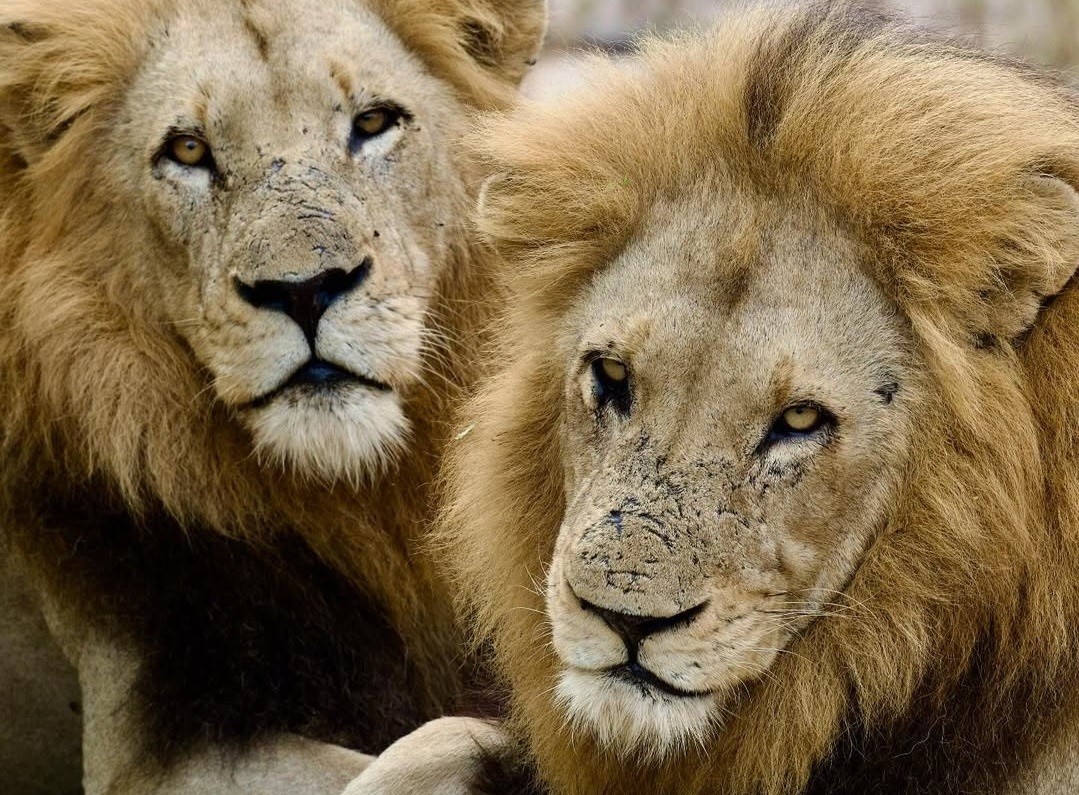
Following their confrontations with the Southern Avoca males and the Gijima coalition, the Nkhulu males successfully consolidated their hold over the southern portions of the Sabi Sands. With their territorial boundaries largely secured, the second half of 2025 proved to be a relatively stable period for the coalition. Regular sightings were recorded around Kirkman's Kamp and Tengile River Lodge, where the males were frequently seen in the company of the Sand River pride and their three cubs. Nkhulu males were observed as far north as the southern reaches of MalaMala, while additional sightings were reported in the Kruger National Park around Skukuza. There, they were seen with several unidentified lionesses, some of which were thought to belong to the Plains Camp pride and other neighboring groups. Perhaps most impressive is the coalition's continued success despite the physical challenges facing several of its members. Three of the five brothers carry various injuries and ailments, yet the coalition has remained highly effective at patrolling and defending its territory. A particularly encouraging sighting occurred on 19th of December, when all five Nkhulu males were observed together at Lion Sands alongside the ever-present Sand River pride. For a coalition that has endured serious injuries, and years of uncertainty, the sighting symbolized just how far they have come. As they continue to raise cubs and defend a significant territory in the region, the Nkhulu males appear well-positioned to remain a dominant force in the southern Sabi Sands for the foreseeable future.
Current Status
After ending 2025 in a position of strength, the start of 2026 has proven far more difficult for the Nkhulu Coalition. Heavy rainfall across the region during January led to severe flooding in parts of the Kruger National Park, creating challenging conditions for wildlife throughout the area. In the aftermath of these floods, two of the Nkhulu males disappeared and have not been seen since. Among them was Snip-tail, the coalition's most dominant male whose disappearance was a significant blow to the coalition. Further setbacks followed as the year progressed. The youngest Nkhulu male, who had been in poor physical condition for an extended period, was sighted on 9th of May with fresh injuries and in very bad condition. It would prove to be his last known sighting, raising concerns that the coalition may have lost a third member within just a few months. Despite these challenges, the remaining males have continued to maintain a presence within their core territory. Smudge and the crooked-tailed male have been seen regularly with the Sand River pride, continuing to patrol the area. While the crooked-tailed male still carries a noticeable limp from previous injuries, he remains active alongside his coalition partner. Smudge, meanwhile, appears to be in excellent condition and arguably looks as strong as he ever has. The coming months will be crucial for the future of the coalition. After a difficult and uncertain start to the year, the hope is that the remainder of 2026 will bring greater stability and better fortunes for the resilient coalition.
The information was gathered through various public medias such as blog pages, forums, and online groups.